
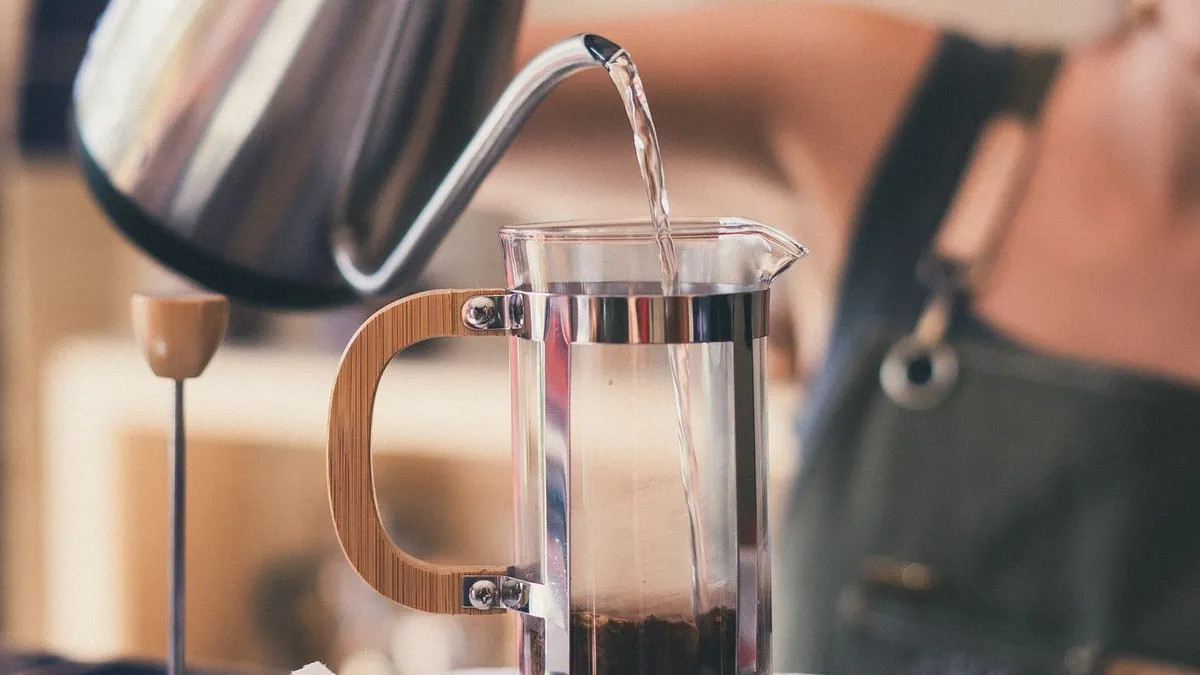
Stuck between pour over and French press? Good news: they're different enough that you don't really have to choose forever. Plenty of coffee drinkers end up with both. Still, they suit different tastes and different mornings, so it's worth knowing what you're signing up for.
PourOverPro is reader-supported. As an Amazon Associate we earn from qualifying purchases. Product details come from each maker's specs and the Amazon listing; we don't lab-test products.
- Choose pour over if you like a clean, bright cup, enjoy a hands-on routine, and have (or plan to buy) a burr grinder.
- Choose French press if you like a full-bodied cup, want minimal effort, brew several cups at once, or don't have a great grinder yet.
- If you can't decide, start with pour over; many people end up using both.
The short version: pour over suits people who like a clean, bright cup, and French press suits people who like something heavy and full-bodied. The details are below.
The Fundamental Difference
Pour over uses a paper filter. Water runs through the grounds and the paper into your cup. The paper grabs most of the oils and fine sediment, so what you get is typically clean and clear.
French press uses immersion and a metal mesh. The grounds sit in hot water for a few minutes, then a metal screen pushes them to the bottom. More oils and fine particles make it into the cup, so the coffee is typically heavier.
Paper versus metal. Almost everything else on this page follows from that.
Taste: The Clearest Difference
Brew the same beans both ways and here's what you'd typically notice:
Pour over: Typically bright and clear, making it easier to pick out origin characteristics, such as the floral and fruity notes often associated with Ethiopian coffees or the chocolate and nut notes often associated with many Colombian coffees. Some people find it a little thin.
French press: Typically heavier and fuller-bodied. The oils and fine particles give it texture and a rich, rounded feel in your mouth. The trade-off is that subtle, delicate flavors can get lost in there.
Which is better? Whichever you like drinking. A common rule of thumb: pour over shows off delicate specialty coffees, while French press plays up body and richness, which a lot of people love with darker or chocolatey beans.
Effort and Attention
Pour over wants a few minutes of your attention. You're pouring, watching the flow, adjusting your pace. For a lot of people that's the best part of the morning.
French press barely asks for anything. Coffee in, water in, set a timer, and go find your keys until it's time to press and pour.
If you want coffee without having to think, get a French press. If you enjoy the process, pour over will give you more back.
What You Need to Start
Pour over: A dripper, filters that fit it, and ideally a gooseneck kettle so you can control the pour. A scale and a burr grinder help a lot.

Hario V60 Plastic Dripper 02
- Lightweight plastic cone dripper
- Size 02 brews 1-4 cups, per Hario
- Uses V60 02 cone filters
The Hario V60 Plastic 02 is a light, easy way to find out if pour over is your thing.
French press: The press. That's about it. Any kettle works, and there are no paper filters to buy.
Bodum Chambord French Press, 34 oz
- Borosilicate glass carafe, polished stainless frame
- Made in Portugal
- Not for stovetop use
The Bodum Chambord is the classic glass French press. If sediment bothers you, the ESPRO P3 uses a dual-layer micro-filter and comes with paper filters, per the listing.
Overall, French press needs less stuff. Pour over means buying filters forever; French press doesn't, though a glass carafe won't survive a hard floor. Check current prices on Amazon.
Grind Requirements
Pour over: Needs a medium-fine, consistent grind. A blade grinder gives you a mix of dust and chunks that drains and extracts unevenly. A burr grinder makes pour over a whole lot easier.
French press: Needs a coarse grind. Immersion is a bit more tolerant of an uneven grind, though the fine bits can still add sediment and bitterness. A burr grinder still helps.
No good grinder yet? French press will forgive you more.
Cleanup
Pour over: Lift out the filter, toss it, rinse the dripper. Done.
French press: Scoop or knock out the wet grounds (not down the sink drain), then rinse the carafe and mesh. Messier, and the mesh needs a proper wash now and then so old oils don't build up.
If you hate cleanup, pour over wins this round.
Brew Time
Pour over: A single cup typically takes around 3-4 minutes including the bloom.
French press: Typically about 4 minutes of steeping plus time to press and pour, longer if you let the fines settle.
That's roughly a tie on the clock. The real difference is what you're doing during those minutes: pouring the whole time, or standing around.
Serving and Holding
Pour over: Goes straight into your cup or a server, and it's done when the dripping stops.
French press: Coffee left sitting on the grounds keeps extracting and can turn bitter, so pour it all off (into cups or a thermal carafe) once it's ready. Don't let it camp out in the pot.
Best Use Cases
Pour over is best when:
- You want to taste a coffee's origin characteristics
- You're brewing specialty or light-roast beans
- You enjoy a hands-on routine
- You have (or plan to buy) a burr grinder
- You want the cleanest cup
French press is best when:
- You like full-bodied, rich coffee
- You're brewing several cups at once
- You want minimal effort and attention
- You don't have a great grinder yet
- You don't want to buy paper filters
Comparison Table
| Factor | Pour Over | French Press |
|---|---|---|
| Typical taste | Clean, bright, clear | Full-bodied, rich, some sediment |
| Effort | Moderate (you pour) | Minimal (you wait) |
| Gear needed | Dripper, filters, ideally gooseneck kettle | Just the press |
| Ongoing supplies | Paper filters | None |
| Grind | Medium-fine, consistent | Coarse, more forgiving |
| Typical brew time | About 3-4 minutes | About 4 minutes plus pressing |
| Cleanup | Quick | A bit messier |
| Best for | Specialty coffee, ritual | Everyday coffee, simplicity, batches |
Which One Should You Choose?
If you're curious about coffee: Start with pour over and a burr grinder. You'll learn how grind, ratio and temperature change the cup, and that carries over to every other method.
If you just want good coffee without the fuss: Get a French press. It's simple and hard to mess up badly.
If you still can't decide: Start with pour over. If the hands-on routine isn't for you, adding a French press later is easy and cheap.
Can You Use Both?
Absolutely, and lots of people do. Pour over on a quiet morning when you want clarity and have a few minutes; French press when you want body or you're making coffee for a houseful of guests. Owning one doesn't rule out the other.
What to remember
Pour over typically makes a clean, bright cup, but it wants your attention and a decent grinder. French press typically makes a full-bodied cup for almost no effort. They do different jobs: pour over shows off delicate coffees, and French press gives you simplicity and body.
Ready to get good at one (or both)? Read our complete pour over brewing guide, our French press guide, and our guide to the best drippers.