
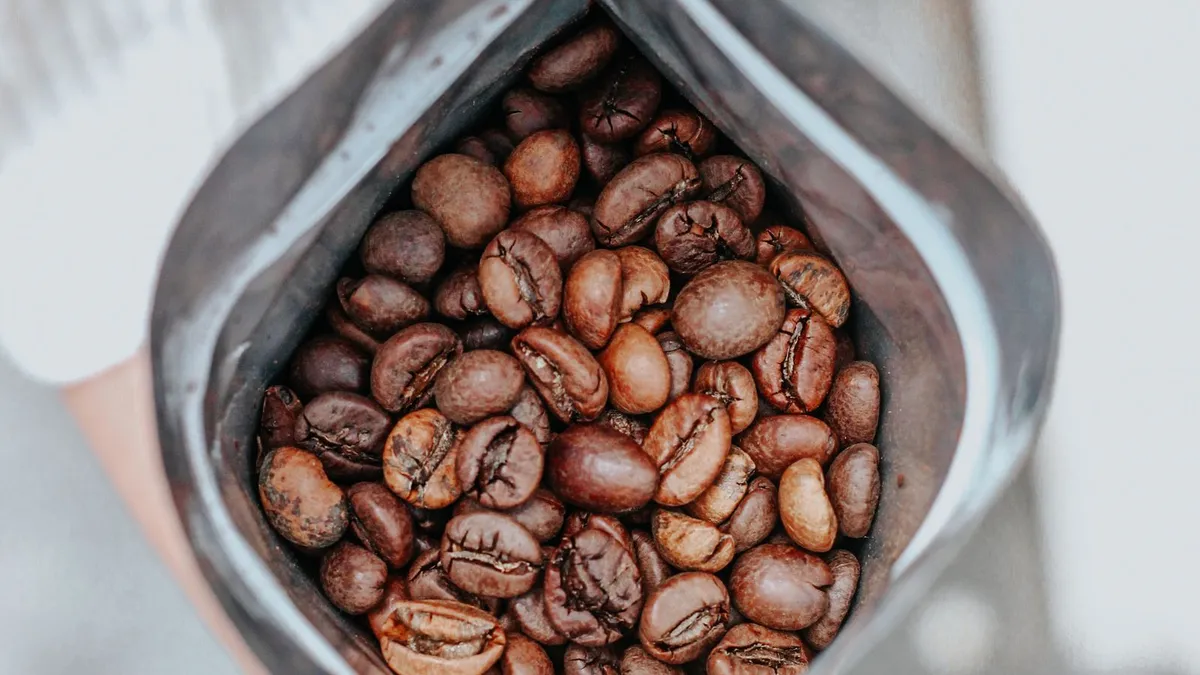
The best beans for pour over aren't necessarily the priciest bag on the shelf. They do tend to have a few things in common: a recent roast date, whole beans you grind yourself, and a roast level that suits the clean, clear cup paper-filtered pour over makes. Below: what to look for on the bag, how to store beans, and the two bits of gear (a burr grinder and a scale) that help any good coffee taste like itself.
PourOverPro is reader-supported. As an Amazon Associate we earn from qualifying purchases. Product details come from each maker's specs and the Amazon listing; we don't lab-test products.
Look for whole beans with a recent, printed roast date, and start with a medium or light-medium roast (a blend or an approachable single origin). Buy what you'll finish in a few weeks and store it airtight, cool and dark. Grind fresh with a burr grinder, weigh with a scale, start around 1:16 with water in the SCA's 195-205°F range, and adjust to taste.
Pour over is a bit of a truth-teller. Paper filters hold back most of the oils and fine particles, so the cup usually comes out clean and clear. That makes a coffee's best qualities easy to taste. It also makes stale beans very easy to notice.
Roast Level: Light and Medium Tend to Shine
A lot of pour over drinkers lean toward light and medium roasts, and the reason is clarity. The method shows off origin character (fruit, floral and tea-like notes) that darker roasting tends to flatten. Brewed well, the acidity in a lighter roast reads as brightness, not sourness.
If you're just starting, a good medium roast is the easy on-ramp. It's approachable, and it's more forgiving while your technique catches up. Light roasts can take more dialing in, often a slightly finer grind or hotter water within the usual range.
Dark roasts work too, but the roast flavors (smoky, bittersweet) tend to take over. If that's your thing, try a slightly coarser grind or slightly cooler water within the brewing range to keep the bitterness down, or save them for French press and cold brew.
Single Origin vs Blends
Single-origin coffees come from one country, region or farm, and they're often roasted to show off what makes that place distinctive. Blends mix coffees from different origins to hit a consistent flavor, often one meant to work across several brew methods.
Single origins are popular for pour over because you can actually taste the differences. Ethiopian coffees, for example, are often described with floral or berry notes, and Kenyan coffees with bright, citrusy acidity, though processing and roasting change a lot.
Don't write off blends. Because they're built for consistency, a good blend is a smart pick while you're still learning: if the cup changes, you know it was your brewing, not the beans.
Roast Date: Check the Bag
Look for a printed roast date, not just a "best by" date. Coffee is generally considered at its most flavorful in the weeks after roasting, then it slowly fades. Freshly roasted coffee also gives off carbon dioxide. That's why many roasters suggest resting beans for a few days before brewing, and it's why pour over coffee puffs up and "blooms" when the water first hits it.
The practical rule: buy what you'll finish in a few weeks, and favor bags with a recent roast date. Local roasters and roasters who sell direct usually print roast dates and often ship soon after roasting, so freshness is easier to judge.
Whole Bean Only
Once coffee is ground, far more of it is exposed to air, so it loses aroma much faster. Buy whole beans and grind right before you brew. For pour over, a burr grinder is the standard advice because it gives a more even grind than a blade grinder, and even grounds extract more evenly.

Baratza Encore (ZCG485BLK)
- 40 grind settings with 40mm conical burrs
- Range runs espresso to French press, per Baratza; best suited to filter brewing
- Front pulse button, DC motor, 1-year warranty
Want electric? The Baratza Encore is a simple conical burr grinder with 40 settings that comfortably cover pour over. Rather grind by hand? The TIMEMORE Chestnut C2S is a manual grinder with a 38mm stainless steel conical burr and a 25 g capacity, enough for one or two cups.
TIMEMORE Chestnut C2S
- Manual grinder, successor to the Chestnut C2
- 38mm CNC stainless steel conical burr, double bearing
- 25g capacity, full metal body
For more options, see our guide to the best coffee grinders for pour over.
How to Store Coffee Beans
- Keep them airtight. Air is one of the main enemies of freshness. A resealable bag with a one-way valve, or an airtight container, does the job.
- Keep them dark and cool. Away from sunlight, the stove and anything else warm. An opaque container or a cupboard works well.
- Skip the fridge. It's humid, and coffee happily soaks up the smell of last night's leftovers.
- Freeze only in portions. If you've bought more than you'll use in a few weeks, a common approach is to freeze sealed portions and thaw each one once. Don't keep taking the same bag in and out.
What Flavor Notes to Look For
Flavor notes on the bag are the roaster's description of how the coffee tastes, not added flavorings. Specific notes ("blueberry, jasmine, clean finish") usually tell you more than vague ones ("bold," "smooth").
For pour over, look for words like clean, bright, floral, citrus, stone fruit, berry or tea-like. Descriptions built around heavy body or smokiness usually point to darker roasts, which many people prefer in a French press or with milk.
Keep an open mind. "Tropical fruit" on a bag of coffee sounds odd, but it's describing the coffee's natural flavor from its origin, processing and roast. Give it a shot.
Weigh Your Beans
Weighing instead of scooping is one of the easiest ways to make your coffee more consistent, because beans vary in size and density. A scale lets you repeat a good cup and change one thing at a time.
Hario V60 Drip Scale (New Model)
- 0.1 g steps from 2-200 g, then 0.5 g and 1 g steps up to 2,000 g max, per Hario
- Built-in timer
- Auto-off after 5 minutes (not while the timer runs); 2 AAA batteries
The Hario V60 Drip Scale reads in 0.1 g steps up to 200 g (per Hario) and has a built-in timer, so weighing and timing happen on one device. A good starting ratio is 1:16 (say, 20 g of coffee to 320 g of water), inside the common 1:15 to 1:17 range. Grind medium-fine, use water in the SCA's commonly cited 195-205°F (90-96°C) range, and adjust to taste one variable at a time.
Once your brewing is steady, the tasting notes on the bag start to make sense, because you're extracting the coffee evenly.
Where to Buy: Choosing a Roaster
- Local roasters often have the freshest beans, and they can tell you which coffees suit pour over.
- Roaster websites usually list origin, process, roast level and flavor notes, and many roast to order.
- Subscriptions are a fun way to explore once you know roughly what you like.
- Supermarket bags can be fine, as long as they're whole bean with a recent roast date.
Start Here, Upgrade from There
New to pour over? Start with a medium or light-medium roast (a blend or an approachable single origin) from a roaster that prints the roast date. Brew it with a scale, a 1:16 ratio and water in the 195-205°F range, then taste.
Next, buy a different single origin and compare. Two coffees tasted back to back on the same setup will teach you more about what you like than any tasting chart.
The best beans for pour over are the ones that make you want a second cup. Everything else is detail.
Quick Checklist: Recent roast date printed on the bag? Light or medium roast? Whole bean? Clear origin and flavor info? Stored airtight, cool and dark? Five yeses and you're set up for a good cup.